
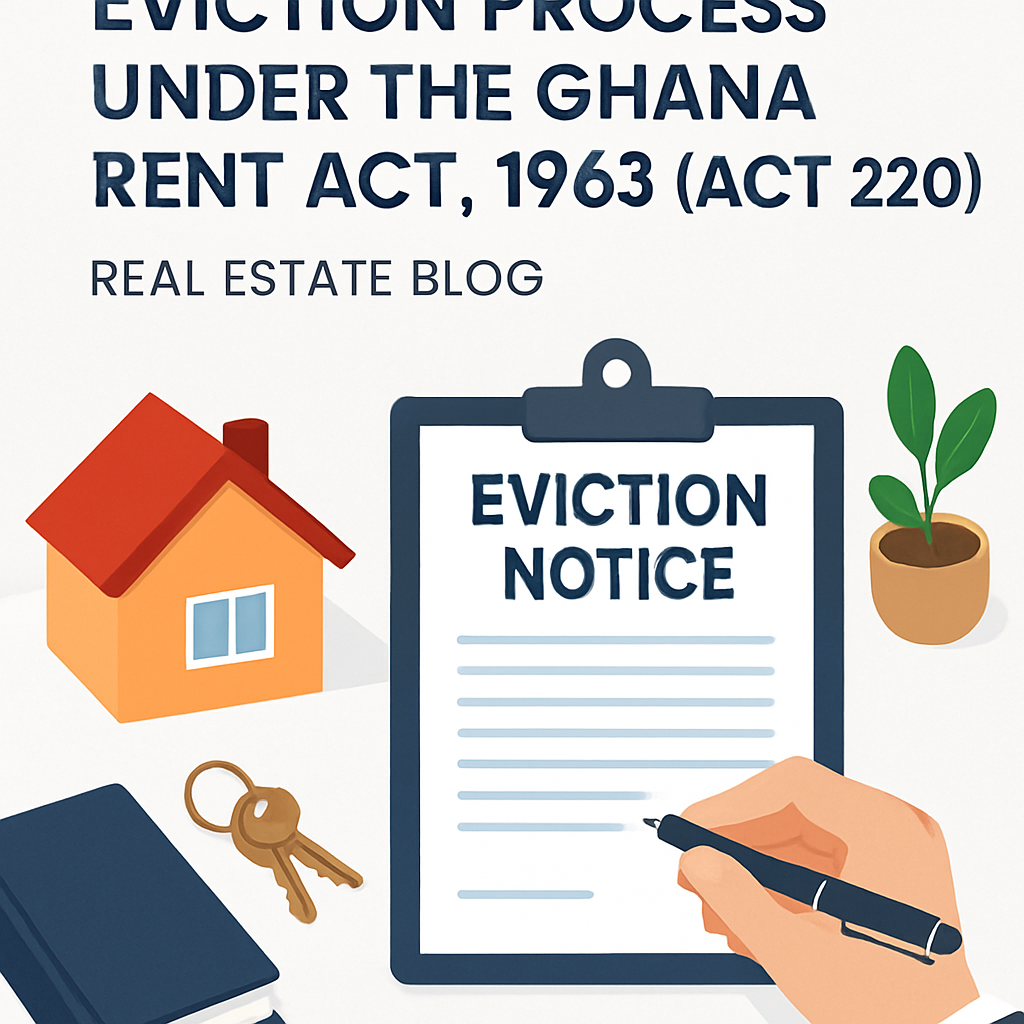
Understanding the Eviction Process Under the Ghana Rent Act, 1963 (Act 220)
This article outlines the lawful process for evicting a tenant in Ghana under the Rent Act, discussing valid grounds for eviction, necessary notices, court procedures, and protections for tenants.
The Ghana Rent Act, 1963 (Act 220) establishes the legal procedures that landlords and tenants must follow when bringing a tenancy to an end and recovering possession of rented premises. Eviction is a legal process, and neither landlords nor tenants are permitted to act outside the procedures prescribed by law.
Understanding the eviction process helps protect the rights of both parties while reducing unnecessary disputes and unlawful actions.
What Is an Eviction?
An eviction is the lawful process by which a landlord recovers possession of rented premises after a tenancy has ended or where the law permits recovery of possession.
A tenant cannot be removed simply because a landlord requests it verbally or wishes to use the property for another purpose. Likewise, a tenant cannot remain in occupation indefinitely where the landlord has lawfully become entitled to recover possession.
The Rent Act provides the legal framework for balancing these competing interests.
Valid Grounds for Recovering Possession
A landlord may seek to recover possession of rented premises on grounds recognized by law. Depending on the circumstances, these may include:
- Expiration or lawful termination of the tenancy.
- Failure by the tenant to pay rent as required under the tenancy agreement.
- Breach of the terms or conditions of the tenancy.
- Unauthorized use of the premises.
- Damage to the property beyond normal wear and tear.
- Occupation in circumstances where the law permits the landlord to recover possession.
- Other grounds provided for under the Ghana Rent Act or other applicable laws.
Each case must be considered on its own facts and in accordance with the law.
Notice Requirements
Before commencing proceedings to recover possession, the landlord is generally required to serve the appropriate notice required by law.
A valid notice should clearly state:
- The identity of the landlord and tenant.
- The premises affected.
- The reason for seeking possession, where applicable.
- The period of notice required by law or the tenancy agreement.
- The date by which possession is required.
The applicable notice period depends on the nature of the tenancy and the relevant provisions of the Rent Act or any other applicable law.
Court Process for Recovery of Possession
If a tenant does not vacate the premises after the required legal procedures have been followed, the landlord should seek recovery of possession through the appropriate court.
The general process may involve:
- Serving the legally required notice.
- Filing an action before the appropriate court.
- Presenting evidence to support the claim.
- Giving the tenant an opportunity to respond.
- The court considering the evidence from both parties.
- The court delivering its decision.
- Enforcement of the court's order where appropriate.
Only a court has the authority to make a binding determination on disputed recovery of possession matters.
Illegal Eviction Practices
A landlord should never attempt to force a tenant out of the property without following the legal process.
Examples of unlawful practices may include:
- Locking the tenant out of the premises.
- Removing or damaging the tenant's belongings.
- Disconnecting electricity or water to force the tenant to leave.
- Using threats, intimidation, harassment, or violence.
- Entering the premises without lawful authority for the purpose of forcing the tenant out.
- Employing private individuals to carry out a forced eviction without lawful authority.
Such actions may expose the landlord to legal liability.
Rights and Protections of Tenants
The Rent Act provides important legal protections for tenants, including the right to:
- Occupy the premises peacefully during the tenancy.
- Receive the notices required by law.
- Be heard before a court where possession is disputed.
- Challenge unlawful eviction attempts.
- Seek legal remedies where their rights have been violated.
These protections help ensure that tenants are treated fairly throughout the eviction process.
Responsibilities of Tenants
Tenants also have legal responsibilities, including:
- Paying rent when it becomes due.
- Complying with the terms of the tenancy agreement.
- Taking reasonable care of the property.
- Respecting the rights of the landlord and neighbouring occupants.
- Vacating the premises when legally required to do so.
Failure to fulfil these obligations may give rise to legal proceedings.
Resolving Eviction Disputes
Where disagreements arise, both landlords and tenants should seek to resolve the matter through lawful means.
This may include:
- Open communication between the parties.
- Assistance from the Rent Control Department where appropriate.
- Mediation or other forms of dispute resolution.
- Seeking legal advice.
- Referring the matter to the appropriate court where necessary.
Following the legal process is often the most effective way to avoid unnecessary conflict and protect the rights of both parties.
Practical Example
Suppose a landlord believes a tenant has breached the tenancy agreement by failing to pay rent for several months.
Rather than changing the locks or removing the tenant's belongings, the landlord should follow the procedures required by law, including serving any necessary notices and, where required, applying to the appropriate court for recovery of possession.
Similarly, if a tenant believes an eviction is unlawful, they should seek legal advice or raise the matter before the appropriate authority or court instead of assuming the landlord has the legal right to remove them immediately.
Conclusion
The eviction process under the Ghana Rent Act, 1963 (Act 220) is intended to balance the rights of landlords to recover possession of their properties with the rights of tenants to enjoy legal protection against unlawful eviction.
Both landlords and tenants should understand that eviction is a legal process governed by the Rent Act and must be carried out in accordance with the law. Respecting these procedures promotes fairness, reduces disputes, and contributes to a more stable and transparent rental housing system in Ghana.
 How to Find a House for Rent in Ghana Without Wasting TimeSep 29, 2026
 Understanding the Ghana Rent Act, 1963 (Act 220) on Advance RentJul 25, 2026
 Common Disputes Between Landlords and Tenants in Ghana: A Legal PerspectiveJul 25, 2026