
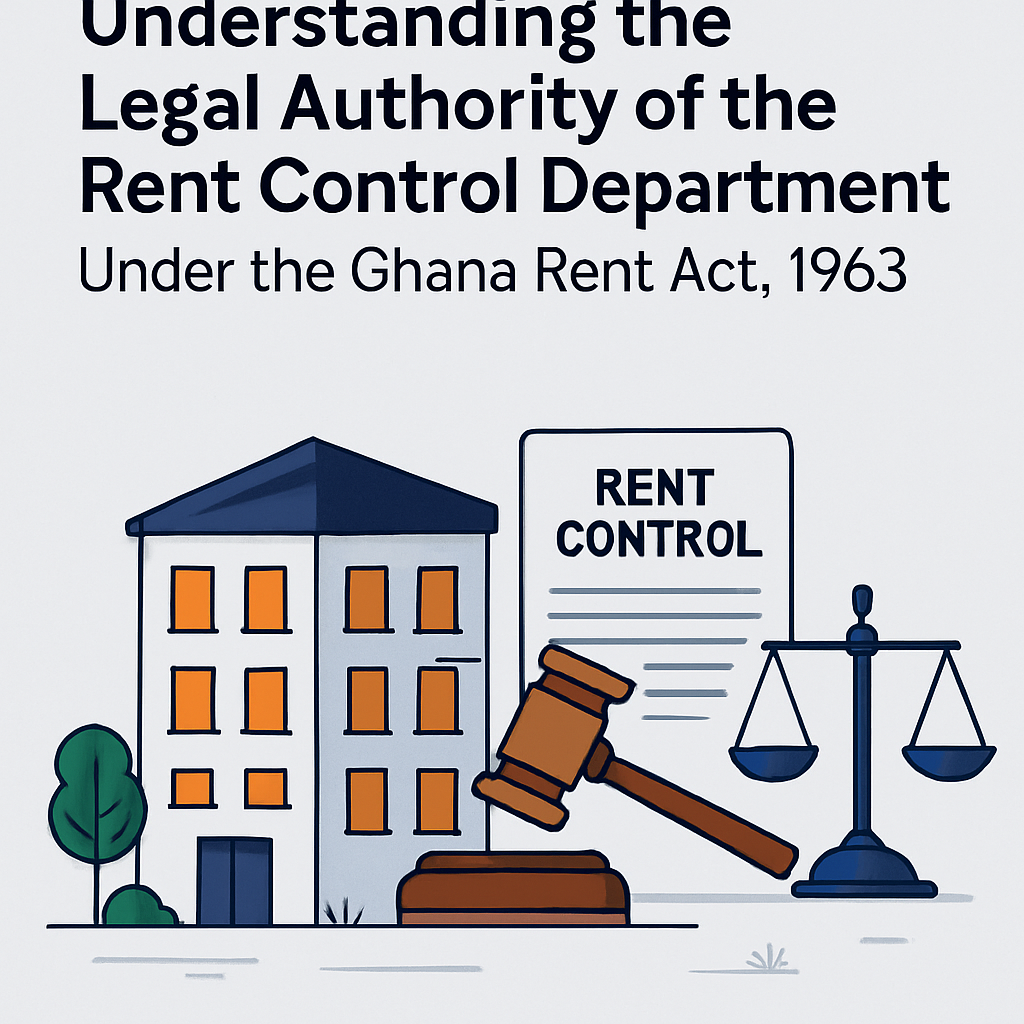
Understanding the Legal Authority of the Rent Control Department Under the Ghana Rent Act, 1963
Explore the legal framework of the Rent Control Department in Ghana, focusing on its authority to fix rent prices or determine recoverable rent under the Ghana Rent Act of 1963.
Understanding the Legal Authority of the Rent Control Department Under the Ghana Rent Act, 1963
The Ghana Rent Act of 1963 (Act 220) plays a critical role in regulating rental agreements and protecting tenants from arbitrary rent increases. A common point of confusion among landlords and tenants is the extent of the Rent Control Department's authority in fixing rent prices versus determining what is deemed recoverable rent. This article aims to clarify these aspects, including the legal processes involved, the significance of inspections, and the necessity of rent assessments.
The Legal Authority of the Rent Control Department
Under the provisions of the Ghana Rent Act, 1963, the Rent Control Department does not possess the authority to arbitrarily fix rent prices. Instead, its primary function is to determine what is considered recoverable rent after thorough assessments. According to Section 1 of the Act, the Department is tasked with ensuring that rents charged are fair and justifiable, taking into account various factors that influence rental pricing.
The Process of Rent Assessment
Before declaring any rent as excessive, the Rent Control Department follows a structured assessment process. This process includes:
The Role of Inspections
Inspections are a vital component of the rent assessment process. They serve to gather firsthand information about the property, which helps the Rent Control Department make informed decisions. Section 4 of the Rent Act empowers authorized officers to enter premises for the purpose of conducting these inspections, ensuring transparency and fairness in the assessment process.
Why Rent Assessments Are Necessary
Rent assessments are crucial in maintaining a balanced rental market. By evaluating the appropriateness of rental prices, the Rent Control Department helps prevent exploitation of tenants through excessive rents. Moreover, these assessments contribute to a stable rental environment, encouraging both landlords and tenants to engage in fair agreements based on factual evaluations rather than subjective opinions.
Conclusion
In summary, while the Rent Control Department under the Ghana Rent Act, 1963 does not have the authority to set fixed rent prices, it plays a critical role in assessing and determining recoverable rent. This process underscores the importance of thorough inspections and fair evaluations, ensuring that both landlords and tenants can operate within a transparent and just rental framework.
 How to Find a House for Rent in Ghana Without Wasting TimeSep 29, 2026
 Understanding the Ghana Rent Act, 1963 (Act 220) on Advance RentJul 25, 2026
 Common Disputes Between Landlords and Tenants in Ghana: A Legal PerspectiveJul 25, 2026