
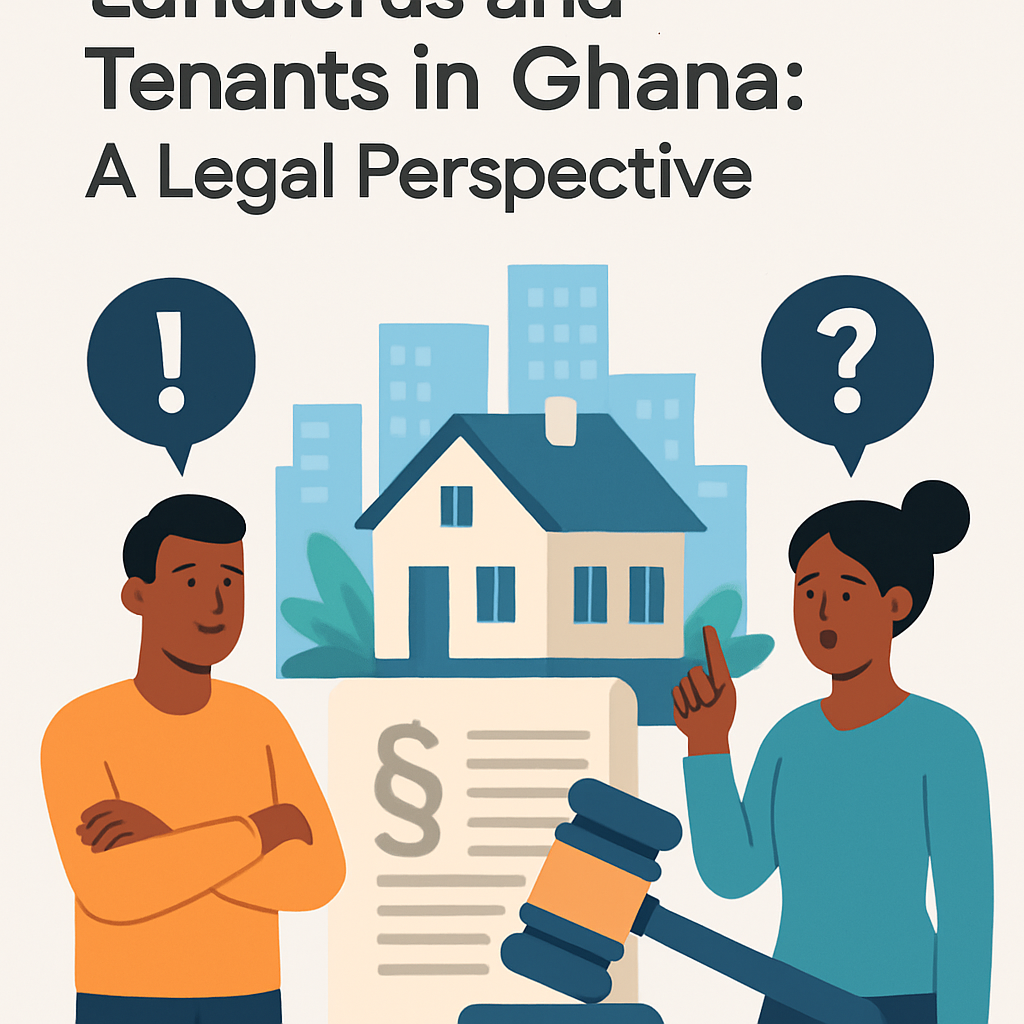
Common Disputes Between Landlords and Tenants in Ghana: A Legal Perspective
Explore the most common disputes between landlords and tenants in Ghana under the Ghana Rent Act, 1963 (Act 220), and learn how to resolve them legally.
Disagreements between landlords and tenants are common in every rental market, and Ghana is no exception. Many of these disputes arise from misunderstandings, poor communication, or a lack of knowledge about the Ghana Rent Act, 1963 (Act 220) and the terms of the tenancy agreement.
Understanding the most common areas of conflict can help both landlords and tenants prevent disputes and resolve them through lawful and constructive means.
1. Non-Payment of Rent
Failure to pay rent when it becomes due is one of the most common causes of disputes.
Tenants are expected to pay rent in accordance with the tenancy agreement, while landlords are expected to follow the legal procedures provided under the Rent Act if rent remains unpaid.
Rather than resorting to threats or self-help measures, landlords should pursue the appropriate legal remedies available under the law.
Likewise, tenants experiencing genuine financial difficulties should communicate with the landlord as early as possible to explore possible solutions before the situation escalates.
2. Repairs and Maintenance
Questions about who is responsible for repairs often lead to disagreements.
Generally, landlords are responsible for maintaining the property in a condition suitable for occupation, while tenants are expected to take reasonable care of the premises during the tenancy.
Where repairs become necessary, tenants should notify the landlord promptly and, where possible, keep written records of the complaint. Landlords should respond within a reasonable time, taking into account the nature and urgency of the repairs.
Good communication and proper documentation can often prevent unnecessary disputes.
3. Security Deposits
Security deposits frequently become a source of disagreement when a tenancy comes to an end.
Common disputes include:
- Whether deductions are justified.
- Alleged damage to the property.
- Outstanding rent or utility bills.
- Delays in refunding the deposit.
To avoid misunderstandings, both parties should properly document the condition of the property at the beginning and end of the tenancy and keep records of all payments and repairs.
4. Right of Entry and Privacy
Tenants have the right to occupy rented premises peacefully and without unnecessary interference.
Although landlords retain an interest in their property, entry should generally occur in accordance with the tenancy agreement or the law, except in genuine emergencies.
Giving reasonable notice before entering the premises helps maintain trust and reduces conflict between both parties.
5. Rent Disputes
Disagreements about rent are among the most common landlord–tenant conflicts.
These disputes may relate to:
- The amount of rent being charged.
- Proposed rent increases.
- Allegations that the rent is excessive.
- Recovery of rent arrears.
Where questions arise concerning Recoverable Rent, the Rent Act provides a legal framework under Section 14 for determining rent through an appropriate assessment rather than relying solely on opinion or comparison with neighbouring properties.
Understanding this process helps both landlords and tenants address rent disputes more objectively.
6. Disturbance and Nuisance
Living peacefully is an important part of every tenancy.
Disputes may arise where there is:
- Excessive noise.
- Disorderly behaviour.
- Illegal activities.
- Damage to shared facilities.
- Interference with neighbouring occupants.
Tenants should use the property responsibly, while landlords should take reasonable steps to address persistent complaints where appropriate.
7. Damage to Property
Disagreements sometimes occur over whether damage resulted from normal wear and tear or from negligence.
To minimize disputes, it is good practice to:
- Conduct inspections at appropriate stages of the tenancy.
- Prepare condition reports.
- Keep photographs and written records.
- Document repairs and maintenance carried out during the tenancy.
These records can provide valuable evidence if disagreements arise later.
8. Recovery of Possession and Eviction
Eviction is often the most serious dispute between landlords and tenants.
The Ghana Rent Act provides legal procedures for recovering possession of rented premises. A landlord should not attempt to remove a tenant by changing locks, disconnecting utilities, intimidating the tenant, or removing personal belongings.
Similarly, tenants should not refuse to comply with lawful court orders once all legal procedures have been followed.
Following the proper legal process protects the rights of both parties and helps avoid unnecessary litigation.
Preventing Landlord–Tenant Disputes
Many disputes can be prevented through good tenancy management.
Both landlords and tenants should:
- Enter into a clear written tenancy agreement.
- Understand their rights and responsibilities.
- Keep records of rent payments and correspondence.
- Report problems promptly.
- Respect each other's legal rights.
- Attempt to resolve disagreements through communication before resorting to legal proceedings.
A well-drafted tenancy agreement and proper documentation often prevent disputes from arising.
Resolving Disputes
Where disputes cannot be resolved through discussion, both parties should use the legal mechanisms available under Ghanaian law.
Possible avenues include:
- Seeking guidance from the Rent Control Department.
- Mediation where appropriate.
- Obtaining independent legal advice.
- Referring the matter to the appropriate court where necessary.
Using lawful dispute resolution processes is generally more effective than taking unilateral action.
Practical Example
Suppose a tenant believes the landlord has unfairly withheld the security deposit after the tenancy ends, while the landlord claims deductions were necessary because of damage to the property.
If both parties have inspection reports, photographs, payment records, and written communication, the dispute can be resolved more easily. Where agreement cannot be reached, either party may seek assistance through the appropriate legal channels established under the Rent Act.
Conclusion
Most landlord–tenant disputes in Ghana stem from misunderstandings, poor communication, or a lack of knowledge of the law. The Ghana Rent Act, 1963 (Act 220) provides a legal framework that protects both landlords and tenants while encouraging fairness, accountability, and due process.
By understanding their legal rights and obligations, maintaining proper records, and following the procedures established by law, landlords and tenants can resolve disputes more effectively and build respectful, long-term tenancy relationships.
 How to Find a House for Rent in Ghana Without Wasting TimeSep 29, 2026
 Understanding the Ghana Rent Act, 1963 (Act 220) on Advance RentJul 25, 2026
 Understanding the Legal Authority of the Rent Control Department Under the Ghana Rent Act, 1963Jul 25, 2026