
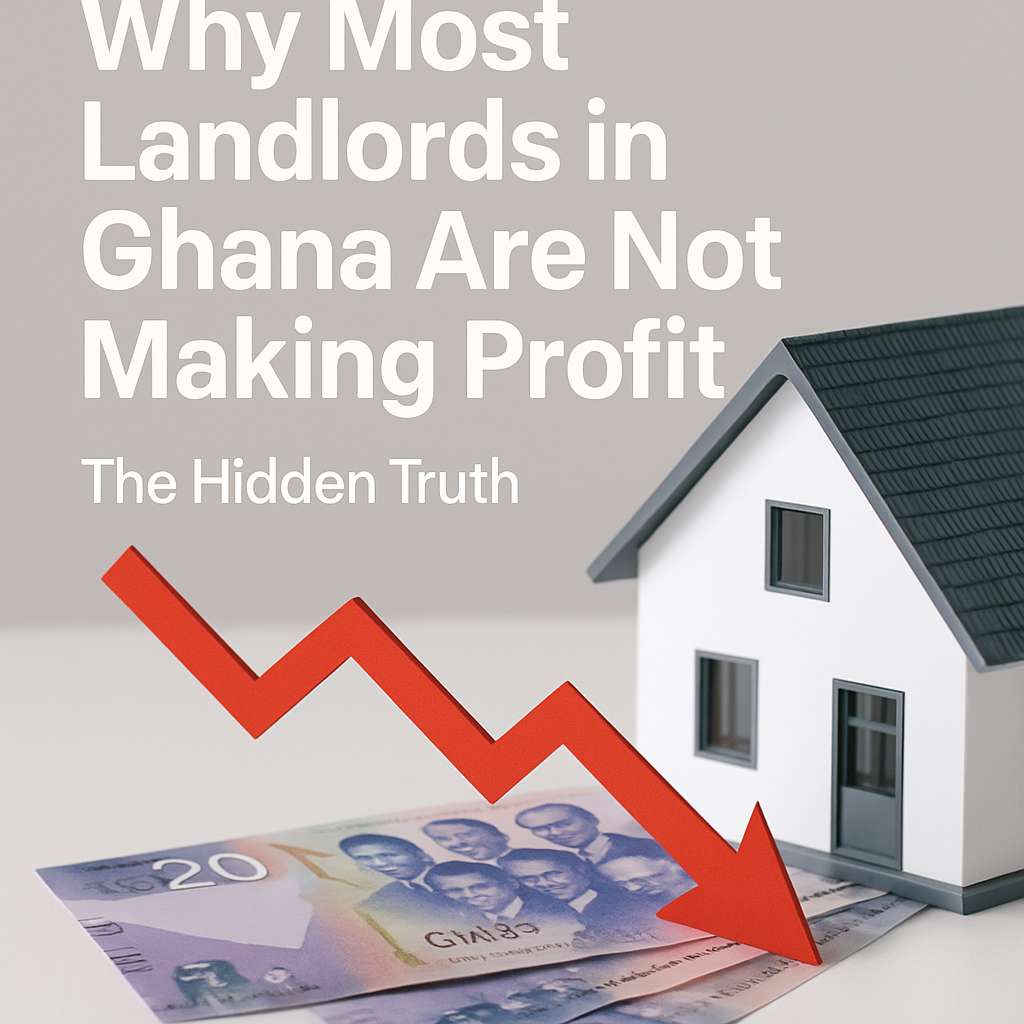
Why Most Landlords in Ghana Are Not Making Profit (The Hidden Truth)
Many people think landlords are rich—but the reality is shocking. Discover the hidden challenges that most landlords in Ghana face.
Why Most Landlords in Ghana Are Not Making Profit (The Hidden Truth)
Many people think landlords are rich—but the reality is shocking. The rental market in Ghana is often perceived to be a goldmine for property owners. However, the truth is that many landlords struggle to turn a profit. In this article, we will uncover the hidden challenges that affect landlords in Ghana and explore why most are not reaping the financial rewards they expected.
Cost of Land & Building Materials
The cost of acquiring land and building properties in Ghana has skyrocketed over the past few years. Rising demand for housing has led to inflated land prices, making it increasingly difficult for landlords to enter the market. Additionally, the cost of building materials has surged, driven by inflation and global supply chain disruptions. This means that many landlords spend a significant portion of their budget on initial investments, which can take years to recoup.
Loans and Interest Pressure
Many landlords rely on loans to finance their property investments. However, with fluctuating interest rates and stringent lending conditions, the cost of borrowing can be burdensome. High-interest loans can eat into rental income, making it challenging for landlords to meet their financial obligations. This pressure can lead to a cycle of debt, further complicating their ability to turn a profit.
Maintenance and Tenant Issues
Once a property is built, the ongoing maintenance costs can be overwhelming. From repairs to regular upkeep, landlords must allocate a portion of their rental income to ensure their properties remain habitable. Moreover, dealing with tenant issues, such as late payments or property damage, can significantly impact profitability. The time and resources spent on resolving these issues can detract from the potential income generated from rental properties.
Inflation vs Rent Stagnation
While inflation continues to rise, rental prices in Ghana have not kept pace. Many landlords find themselves in a position where they are unable to raise rents due to market competition, tenant affordability, or regulatory constraints. This stagnation in rental income, coupled with rising costs, erodes profit margins and makes it difficult for landlords to maintain a sustainable business.
Conclusion
The rental business in Ghana can be a challenging endeavor. While the perception may be that landlords are reaping substantial financial rewards, the reality is often far more complex. Understanding the hidden costs and challenges can help current and prospective landlords navigate this competitive market more effectively. By addressing these issues, landlords can create a more sustainable and profitable rental business.
 Ghana’s New Rent Act: Will It Protect Landlords and Tenants Fairly?Jul 7, 2026
 Government to Implement New Rent Legislation for Enhanced Tenant ProtectionJul 7, 2026
 Rent Control Commissioner Cautions Public About Unregistered Rent AgentsJul 3, 2026