
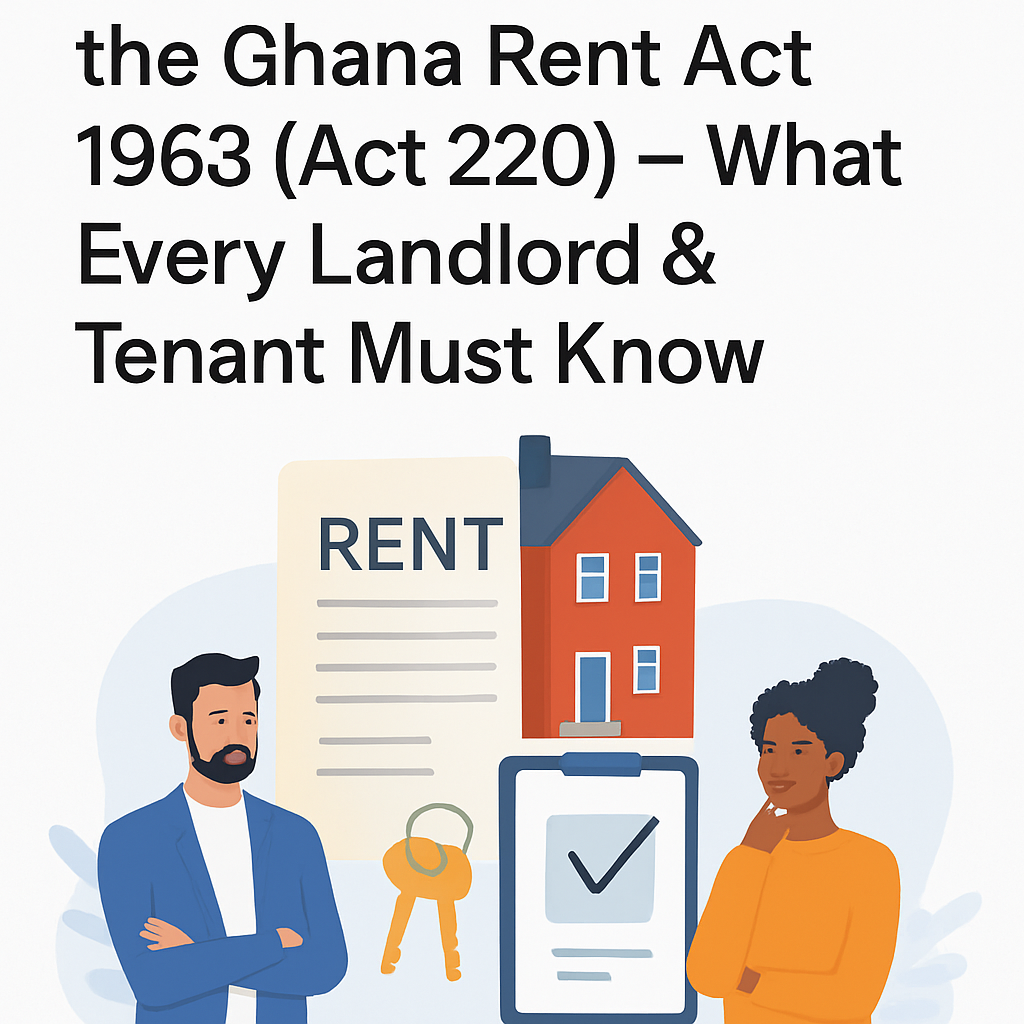
The Truth About the Ghana Rent Act 1963 (Act 220) – What Every Landlord & Tenant Must Know
Understanding the Ghana Rent Act 1963 (Act 220) is crucial for both landlords and tenants. This article breaks down the key aspects of the law, including rent advances, the rent card, and the legal rights of both parties.
The Truth About the Ghana Rent Act 1963 (Act 220)
Most Ghanaians have never actually read the rent law, leaving many landlords and tenants unaware of their rights and obligations. The Ghana Rent Act 1963 (Act 220) serves as a crucial framework governing rental agreements across the country. In this article, we will explore the key elements of this law that every landlord and tenant must know.
What the Law Says About Rent Advance
One of the most significant aspects of the Ghana Rent Act is its stance on rent advances. According to the law, landlords are permitted to collect a maximum of six months' rent in advance. This provision aims to protect tenants from exorbitant demands while ensuring landlords receive a reasonable guarantee of payment. It is essential for both parties to understand this limit to avoid disputes and ensure compliance with the law.
Rent Card Explained
The Rent Card is another pivotal feature of the Ghana Rent Act. This document serves as proof of payment and outlines the rental terms agreed upon by the landlord and tenant. The law mandates that landlords provide a Rent Card to tenants upon payment of rent. This card is crucial for resolving any future conflicts regarding payments, as it details the rental amount, payment dates, and other essential terms. Tenants should always ask for their Rent Card to safeguard their rights.
Legal Rights of Landlords vs. Tenants
The Ghana Rent Act 1963 (Act 220) clearly outlines the legal rights and responsibilities of both landlords and tenants. Landlords have the right to receive timely rent payments and to maintain their property in a habitable condition. On the other hand, tenants are entitled to live in a safe environment and to privacy within their rented space. The law also protects tenants from arbitrary eviction, ensuring that landlords must follow proper legal procedures before terminating a tenancy.
Understanding these rights is vital for both parties to foster a harmonious rental relationship. It is advisable for landlords to familiarize themselves with their obligations to avoid legal repercussions, while tenants should be aware of their rights to seek recourse when necessary.
Conclusion
The Ghana Rent Act 1963 (Act 220) is designed to create a balanced relationship between landlords and tenants. By understanding the provisions regarding rent advances, the importance of the Rent Card, and the legal rights of both parties, Ghanaians can navigate the rental landscape more effectively. Knowledge of this law not only empowers individuals but also helps in fostering a more equitable housing market.
 How to Find a House for Rent in Ghana Without Wasting TimeSep 29, 2026
 Understanding the Ghana Rent Act, 1963 (Act 220) on Advance RentJul 25, 2026
 Common Disputes Between Landlords and Tenants in Ghana: A Legal PerspectiveJul 25, 2026