
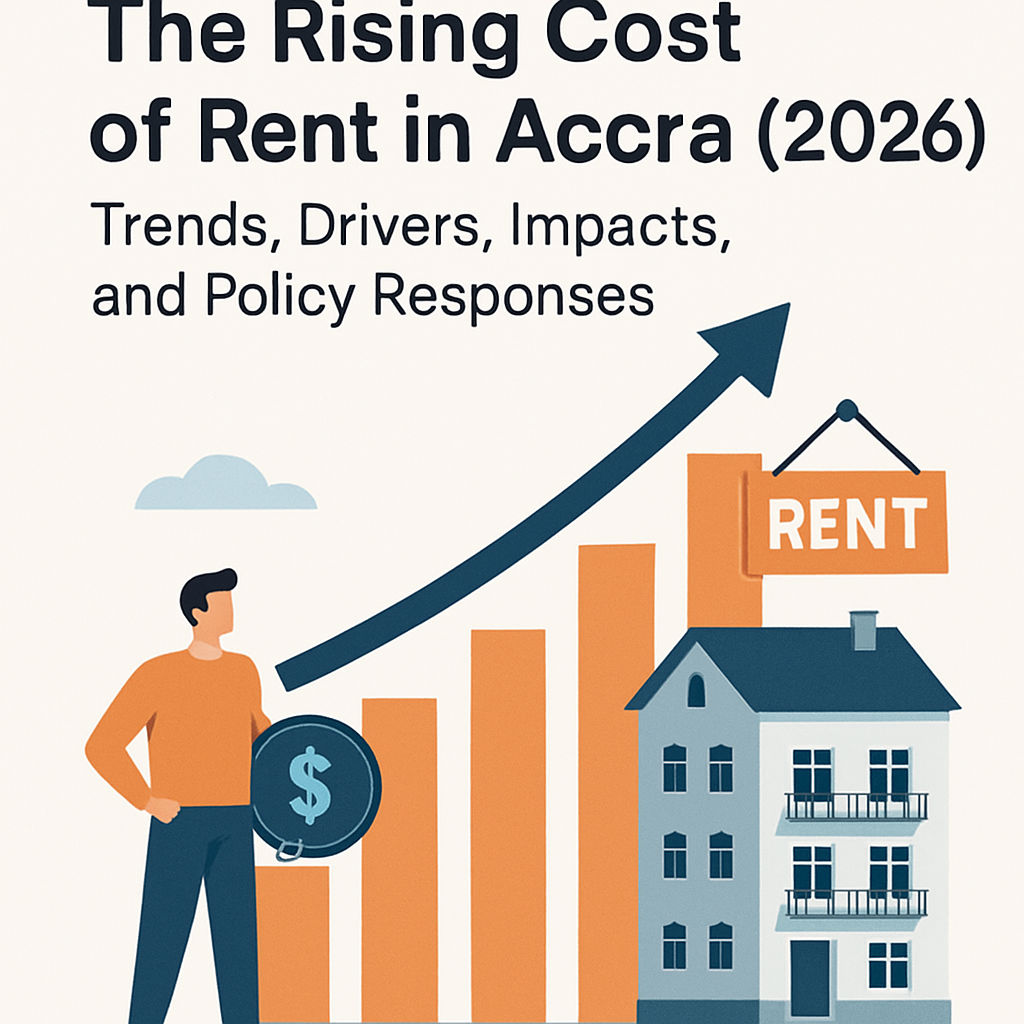
The Rising Cost of Rent in Accra (2026): Trends, Drivers, Impacts, and Policy Responses
As of 2026, Accra's rental market faces unprecedented price surges driven by macroeconomic pressures, demographic shifts, and supply constraints. This article explores the implications for residents and potential policy responses.
The Rising Cost of Rent in Accra (2026): Trends, Drivers, Impacts, and Policy Responses
As of 2026, the cost of renting residential property in Accra, Ghana’s capital and economic hub, has reached unprecedented levels. This surge in rental prices reflects a complex interplay of macroeconomic pressures, demographic shifts, supply constraints, and evolving urban infrastructure. The consequences are profound, affecting the daily lives of millions, especially middle- and low-income households, and shaping the city’s socioeconomic landscape.
1. Current Rental Prices in Accra (2026)
1.1. Citywide Rental Price Benchmarks
As of early 2026, Accra’s rental market is characterized by significant variation across property types and neighborhoods. The average rent per square meter in Accra is approximately GH₵50/month ($3.20), with a range from GH₵30 in outer districts to GH₵90+ in central, high-demand neighborhoods.
1.2. Neighborhood-Level Rental Price Comparisons
Rental prices vary dramatically by neighborhood, reflecting differences in prestige, infrastructure, tenant profile, and proximity to business or diplomatic hubs. Prime neighborhoods like Airport Residential and Cantonments command the highest rents, often targeting expatriates and affluent Ghanaians.
1.3. Rent Per Square Meter and Unit Size Metrics
Typical apartment sizes include 1-bedroom units at 40–50 m² and 2-bedroom units at 70–85 m², with properties featuring amenities like backup power and air conditioning commanding higher rents.
2. Historical Rent Trends (2019–2026)
2.1. Rent Growth Trajectory
Accra’s rental market has experienced sustained rent increases over the past seven years, with notable spikes correlating with national inflation and construction cost surges.
3. Key Drivers of Rent Increases
3.1. Macroeconomic Factors
Inflation and monetary policy play critical roles in shaping the rental market, influencing both supply costs and tenant affordability.
4. Socioeconomic Impacts
4.1. Impact on Middle- and Low-Income Households
Affordability crises and the requirement for large upfront payments have forced many families into overcrowded or informal settlements, leading to significant social and health consequences.
5. Legal and Regulatory Framework
5.1. The Rent Act and Enforcement Gaps
Enforcement of existing laws is weak, allowing landlords to demand excessive advance rents and perpetuating exploitation.
6. Government Policy Responses and Affordable Housing Initiatives
6.1. Affordable Housing Programs
Government initiatives like the “My Home, My Peace” program aim to increase affordable housing stock, but challenges remain due to high construction costs and limited scale.
7. Comparative Analysis: Accra vs. Other Cities
Accra’s rental prices significantly exceed those of other Ghanaian cities, highlighting a deep affordability crisis exacerbated by macroeconomic challenges.
Conclusion
The rising cost of rent in Accra as of 2026 stems from structural challenges that require sustained, coordinated action across government, private sector, and civil society. Without decisive reforms, the affordability gap will continue to widen, affecting millions of residents.
 A Comprehensive Breakdown of Costs for Building and Running a Hostel in KNUST Campus Area, GhanaJul 3, 2026
 Common Mistakes First-Time Home Buyers Make in GhanaMar 4, 2026
 🏘 Top 10 Affordable Areas to Rent in Accra (2026 Guide)Feb 26, 2026