
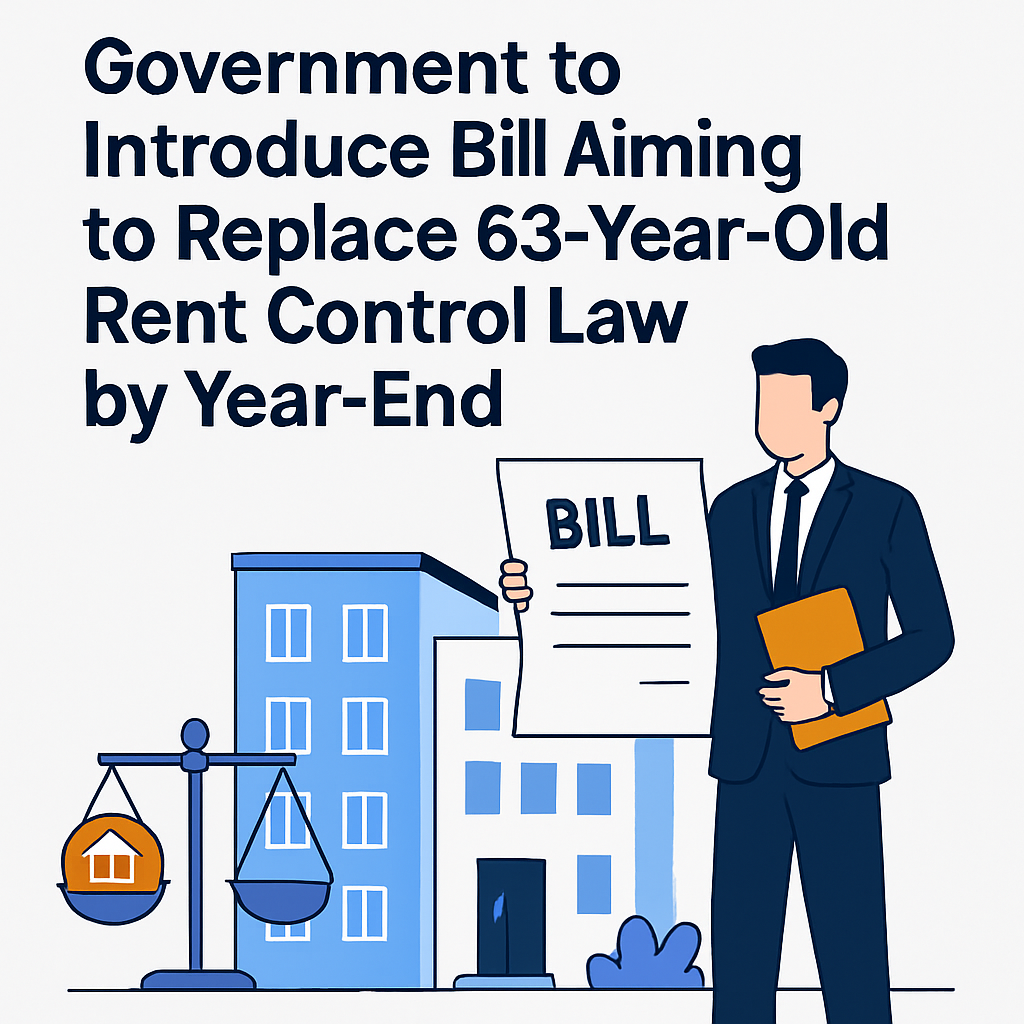
Government to Introduce Bill Aiming to Replace 63-Year-Old Rent Control Law by Year-End
The government is preparing to present a bill to Parliament by the end of this year, set to overhaul Ghana's long-standing rent control legislation, with expectations for a modernized framework that aligns with current housing market dynamics.
The government is preparing to present a new rent bill to Parliament before the end of the year as part of efforts to replace Ghana’s decades-old rent control legislation.
The proposed bill is expected to introduce a modern legal framework that reflects the realities of Ghana’s current housing and rental market. It is also intended to address long-standing concerns raised by landlords, tenants, property developers, housing professionals and other stakeholders.
Ghana’s existing rent control legislation has remained in force for more than six decades. Over the years, many industry players have argued that parts of the law no longer adequately respond to current economic conditions, increasing property development costs, rising rental demand and the changing relationship between landlords and tenants.
The planned legislation is therefore expected to provide clearer rules for the rental housing sector while promoting fairness, transparency and accountability.
Ghana’s Existing Rent Control Framework
The current rent control law was introduced at a time when Ghana’s population, housing demand, property values and cost of construction were significantly different from present conditions.
Since then, the country has experienced rapid urbanisation, population growth and increased demand for accommodation, particularly in major cities and growing urban centres.
However, the supply of affordable rental housing has not increased at the same pace as demand. This has contributed to rising rent prices, disputes over rent advances, informal tenancy arrangements and disagreements between landlords and tenants.
Many rental agreements are still based on verbal arrangements, while some tenants occupy properties without properly documented tenancy terms. In other situations, landlords and tenants may not clearly understand their legal rights and responsibilities.
These challenges have increased calls for a comprehensive review of the country’s rent laws.
Why a New Rent Law Is Needed
Stakeholders have repeatedly described the existing law as outdated and difficult to apply to the modern rental market.
One major concern is that some provisions do not sufficiently reflect the actual cost of developing, maintaining and managing rental properties today. Landlords often face high construction costs, building material expenses, property maintenance costs, utility charges, taxes and financing obligations.
Tenants, on the other hand, continue to struggle with high rent advances, limited access to affordable housing, sudden rent increases and the lack of formal tenancy agreements.
A modern rent law is therefore expected to balance the interests of both parties.
The new framework could help ensure that tenants are protected from unfair treatment while also recognising the legitimate rights of landlords to earn reasonable returns on their property investments.
Expected Areas of Reform
Although the full details of the bill will become clearer when it is formally presented to Parliament, the proposed legislation is expected to address several important areas within the rental housing sector.
These may include rental pricing, rent advances, tenancy agreements, landlord and tenant responsibilities, dispute resolution, property maintenance, rent increases and procedures for recovering possession of rented premises.
The bill is also expected to provide clearer guidelines on how tenancy agreements should be prepared and enforced.
Written tenancy agreements could help reduce misunderstandings by clearly stating the rent amount, payment period, duration of the tenancy, utility responsibilities, maintenance obligations and conditions for renewing or ending the agreement.
Clear documentation would also make it easier for landlords and tenants to resolve disputes when either party fails to comply with the agreed terms.
Rent Pricing and Affordability
Rental pricing remains one of the most sensitive issues in Ghana’s housing sector.
Tenants frequently complain about rising rental costs and demands for long periods of advance rent. Landlords, however, argue that rental prices are influenced by construction costs, property location, maintenance expenses, demand, inflation and the quality of the accommodation.
The proposed law is expected to provide a clearer system for dealing with rental pricing disputes.
A balanced approach would need to protect tenants from unreasonable demands while avoiding policies that discourage private individuals and companies from investing in rental housing.
Since the private sector provides a large portion of Ghana’s rental accommodation, the new law will need to encourage investment while promoting affordability.
Protection of Tenant Rights
The proposed legislation is expected to strengthen protections for tenants.
These protections could include the right to peaceful occupation of rented premises, proper notice before tenancy termination and protection against unlawful eviction.
Tenants may also receive clearer guidance on how to report landlords who breach tenancy agreements or violate rental regulations.
At the same time, tenants would be expected to fulfil their responsibilities, including paying rent on time, taking reasonable care of the property and complying with the terms of the tenancy agreement.
A fair rental system cannot protect only one party. It must clearly define the rights and duties of both landlords and tenants.
Protection of Landlord Rights
Landlords are also expected to receive clearer legal protection under the new framework.
This may include procedures for dealing with rent arrears, property damage, breach of tenancy conditions and tenants who refuse to vacate after the lawful termination of an agreement.
Many landlords have expressed frustration over the difficulty and length of time involved in resolving tenancy disputes.
The new bill could introduce more efficient procedures for addressing such cases while ensuring that landlords do not take the law into their own hands.
Clear legal processes would protect property owners while preventing unlawful eviction, intimidation or disconnection of essential services.
Improved Dispute Resolution
Disputes between landlords and tenants are common in Ghana.
They often involve unpaid rent, rent increases, security deposits, maintenance responsibilities, utility bills, eviction notices and disagreements over tenancy terms.
The proposed law is expected to improve the process for resolving these disputes.
A more efficient system could reduce the pressure on the courts and allow complaints to be handled within a reasonable period.
Mediation and other alternative dispute-resolution methods could also help landlords and tenants settle disagreements without lengthy and expensive legal proceedings.
Government’s Commitment to Rental Housing Reform
Government officials have indicated that the proposed bill forms part of a broader commitment to create a fairer and more balanced rental housing system.
The reform is expected to improve confidence within the rental market by establishing clearer rules for all parties.
A properly regulated rental sector could also encourage property owners to invest in additional housing while giving tenants greater confidence that their rights will be protected.
The success of the new law will, however, depend on effective implementation, public education and enforcement.
Introducing a new law without providing the necessary institutions, personnel and resources to enforce it may not produce the expected results.
Stakeholder Consultation
As the government prepares to table the bill, consultations with key stakeholders will be important.
Landlords, tenants, property developers, estate agents, legal professionals, housing associations, civil society organisations and local authorities should be given an opportunity to contribute to the process.
Their input could help lawmakers identify practical challenges within the rental market and develop provisions that can be effectively implemented.
Stakeholder consultation would also reduce the risk of introducing policies that unfairly disadvantage one group.
The final legislation must recognise the financial realities of property ownership while also responding to the housing difficulties faced by tenants.
What Happens Next
The next major step will be the formal presentation of the bill to Parliament.
After it is tabled, lawmakers are expected to review its provisions, debate the proposed reforms and refer it to the appropriate parliamentary committee for further consideration.
The committee may invite submissions from individuals, organisations and industry stakeholders before making recommendations.
Parliament could propose amendments to the bill before it is passed.
After parliamentary approval, the bill would need presidential assent before it becomes law.
The government would then be required to develop the necessary regulations, administrative systems and public education programmes to support its implementation.
Conclusion
The proposed replacement of Ghana’s 63-year-old rent control law represents an important step towards reforming the country’s rental housing sector.
A modern rent law could provide clearer tenancy rules, improve dispute resolution, protect landlords and tenants and promote greater transparency within the rental market.
However, the effectiveness of the new legislation will depend on whether it fairly balances the interests of property owners and occupants.
It must also be supported by proper enforcement, public education and meaningful stakeholder participation.
As the government prepares to submit the bill to Parliament, landlords, tenants and housing-sector organisations will be watching closely to see how the proposed law addresses the practical challenges affecting Ghana’s rental market.
 Rent Commissioner Takes Action Against Landlady Over Tenant's Forced EvictionOct 16, 2026
 Ghana's Rent Control Task Force to Enforce New Regulations in 2027Sep 25, 2026
 Ghana's New Task Force to Enforce Rent Control RegulationsSep 25, 2026