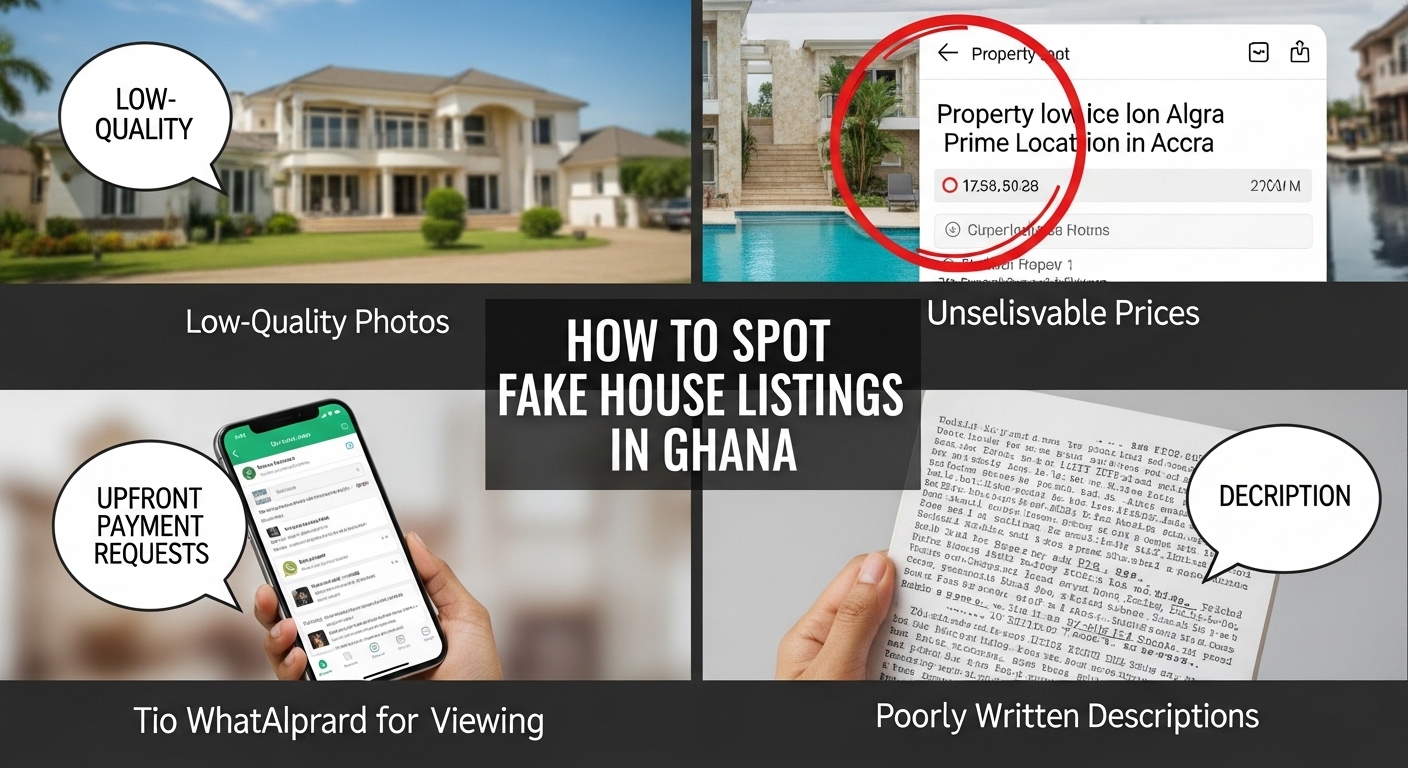
🔍 How to Spot Fake House Listings in Ghana
With Ghana’s real estate market booming, so are the scams. This guide helps renters and buyers identify fake house listings, spot scammers, and avoid costly mistakes by recognizing red flags in pricing, photos, and communication.
Ghana’s property market is expanding rapidly, attracting both local and diaspora investors. Unfortunately, this growth has also led to a surge in fake house listings and real estate scams. Whether you're renting or buying, knowing how to spot fraudulent listings is essential to protect your money and peace of mind.
1. Scammers and Fake Agents
Many scams begin with individuals posing as agents or landlords. They often use urgency and emotional pressure to rush decisions.
Red flags include:
• Refusal to meet in person or show the property physically
• Demands for upfront payments before viewing
• No verifiable office or business registration
• Poor communication or evasive answers
Tip: Always verify agent credentials with the Ghana Real Estate Professionals Association (GREPA) or ask for references.
2. Unrealistic Pricing
If the price seems too good to be true, it probably is. Scammers often lure victims with below-market rates to spark interest.
Watch out for:
• Rent or sale prices significantly lower than similar properties in the area
• Claims of “urgent sale” or “limited-time offer” without justification
• No breakdown of costs (e.g., utilities, maintenance fees)
Tip: Compare listings on trusted platforms like Meqasa, Tonaton, or Jumia House to gauge realistic pricing.
3. Fake Photos and Misleading Media
Scammers frequently use stock images or photos stolen from other listings.
Red flags include:
• Blurry or overly polished images with no local context
• No exterior shots or neighborhood views
• Inconsistencies between photos and description (e.g., claiming 3 bedrooms but showing only 1)
Tip: Use reverse image search tools to check if the photos appear elsewhere online.
4. Red Flags in Listings
Fraudulent listings often share common traits:
• Vague location details (e.g., “near the mall” without naming the area)
• No lease terms, property documents, or inspection reports
• Poor grammar or spelling errors in the description
• Pressure to “act fast” or “send money now”
Tip: Always request a tenancy agreement or property title before making payments.
 Rent Commissioner Takes Action Against Landlady Over Tenant's Forced EvictionOct 16, 2026
 How to Find a House for Rent in Ghana Without Wasting TimeSep 29, 2026
 Ghana's Rental Housing Crisis: Challenges and Government InterventionsSep 25, 2026